Lead: IIT Guwahati (IITG)
Disasters emerge from the interaction of hazards, exposure, vulnerability, and risk. Effective early warning systems (EWS) are crucial for preparedness and loss reduction...
In India, systems like FLEWS (Assam), iFLOWS (Chennai, Mumbai), FFEWS (Kolkata), and UFM (Bengaluru) offer forecasts for fluvial, pluvial, and coastal floods, while NADAMS monitors agricultural drought using rainfall and satellite indices. However, long-term forecasts and AI-ML accuracy remain limited. In the Netherlands, Delft-FEWS forecasts floods for the Rhine and Meuse, and droughts are tracked using climatic water balance and soil data. Wageningen’s DEWS extends seasonal forecasting across Europe. WS1 will catalogue and systematically map existing flood and drought early warning systems, identify gaps in warning communication and dissemination, culminating in a joint India–Netherlands report integrating technical, operational, and socio-cultural insights for future LODESTAR activities.
Lead: Indian Institute of Science (IISc)
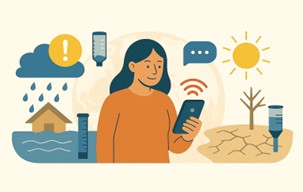
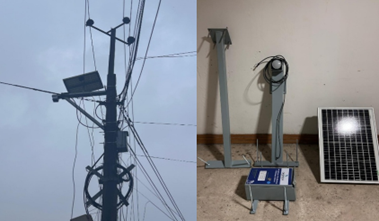
It will monitor rainfall, streamflow, and flood depth using low-cost, portable sensors such as smartphone cameras for participatory data collection...
Image-based deep learning models will estimate rainfall intensity, streamflow velocity, and inundation levels, validated against ground truthing data. Both edge and cloud processing frameworks will be tested for timely data delivery. Extended forecasts will link short- and long-term predictions, aiding medium-term planning and community preparedness. Seasonal drought forecasting will use bias-corrected outputs from global climate models, downscaled via machine learning and integrated with hydrologic models to produce streamflow warnings. Deliverables include a hydrometeorological data repository (D2.1) and an open-source computer vision algorithm (D2.2), strengthening citizen science and improving Multi-Hazard Early Warning System (MH-EWS) accuracy and adoption.
Lead: MetaMeta Research B.V.
Each lab will integrate citizen science, horizontal learning, and serious gaming to drive socio-technical innovation for mobile and web-based Multi-Hazard Early Warning Systems (MH-EWS)...
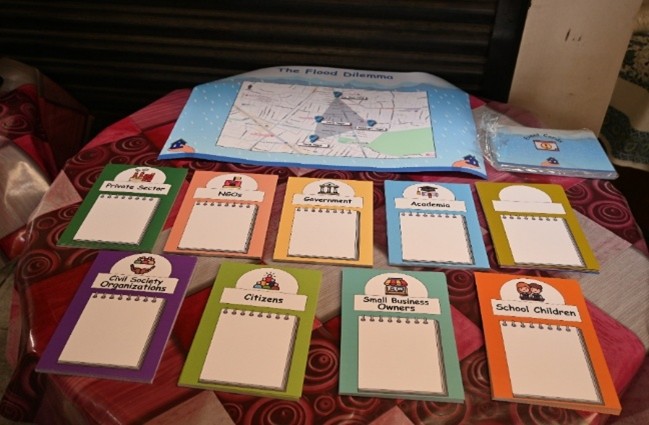
These labs will align with local needs, institutional contexts, and cultural knowledge while designing for, with, and by users. Emphasizing participatory design, learning, and conflict management, they will support MH-EWS adoption. Citizen science will merge local and expert knowledge, especially in marginalized or hazard-prone areas, using social mapping and field visits. Serious games will simulate disaster scenarios to foster problem-solving and collaboration. Operating in the Netherlands (Dordrecht, Geertruidenberg) and India (Guwahati, Bengaluru, Anantapur), WS3 will deliver six serious games and functional living labs, supporting WS2 and WS4 in assessment, communication, and implementation of effective disaster management.
Lead: IIT Tirupati (IIT-T)
Building on WS2 data, WS4 will develop MH-EWS algorithms and ML models for improved flood/drought forecasting...
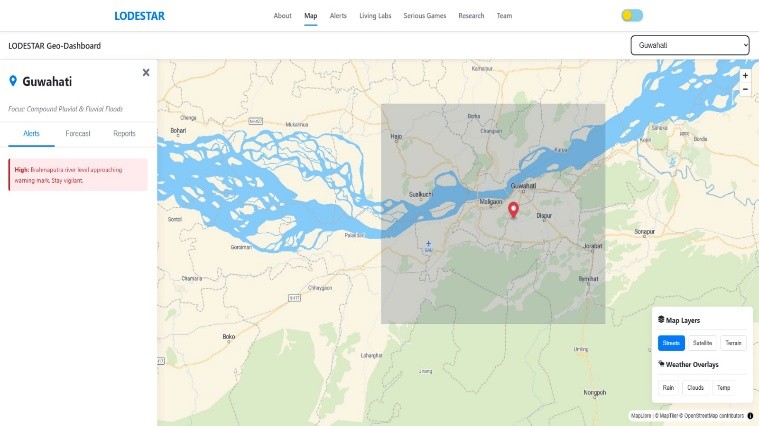
The co-developed dashboard will function as a decision support system (DSS) integrating WS1–WS5 outputs through three components: (i) GIS-based interface for spatial mapping and visualization, (ii) model base with physical and ML models, and (iii) MSSQL database for data storage. Stakeholder engagement ensures usability and adoption, combining scientific and traditional knowledge to bridge the know-do gap. WS4 will deliver (D4.1) MH-EWS algorithms, (D4.2) ML models for flood, drought, and CFD prediction, and (D4.3) a mobile and web-based dashboard supporting early warnings, decision-making, and community empowerment.
Lead: Wageningen University & Research (WUR)
It aims to enhance expertise in flood and drought forecasting, disaster management, and policy research while promoting effective communication and use of LODESTAR findings in decision-making...
Activities include creating networks of champions across academia, industry, government, and NGOs for continuous knowledge exchange and early warning dissemination. Capacity-building targets researchers and practitioners through summer academies, governance conferences, and training workshops, with at least 50% female participation. MSc and PhD students in India and MSc and postdoctoral researchers in the Netherlands will engage in collaborative learning and knowledge exchange. International webinars, global DRR engagement, and an exchange visit to the Netherlands will foster mutual learning. The main deliverable is enhanced human and institutional capacity, creating a sustainable network of skilled actors for improved coordination, research, policy, and disaster management practices.